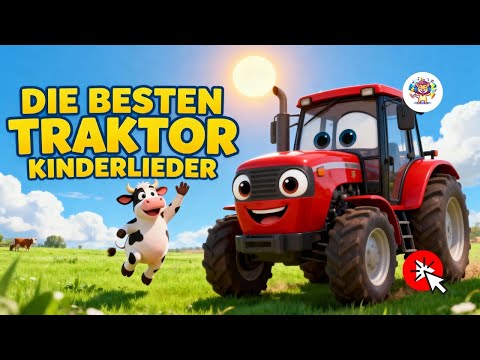
 5:25
5:25 Learn German with children’s songs
No lessons, no vocabulary drills, no app streak. A child learns a language the way it learns everything else: by hearing the same thing often enough that it stops being foreign. Songs are simply the most patient way to deliver that repetition.
BROWSE ALL SONGSWhy songs work for language learning
Syllables become audible
When sung, every syllable gets its own note. “Ba-na-ne” is three distinct sounds instead of one blurred word — exactly the structure learners need.
The tempo drops
Sung German is slower than spoken German. There is time to hear each sound before the next one arrives.
Repetition without boredom
Nobody repeats a sentence forty times in conversation. Children happily sing the same song forty times — and get the practice volume no course can offer.
Five steps that actually work
This is the routine we would suggest to a family starting from zero. It takes about ten minutes a day.
- 1 Pick one song, not a playlist A single song heard twenty times does more than twenty songs heard once. Repetition is the whole mechanism.
- 2 Watch it together the first time Point at what is on screen while the word is sung. The picture carries the meaning, so nothing has to be translated.
- 3 Let it run without the screen after that Once the pictures are known, the song works as audio — in the car, at breakfast, while building things.
- 4 Sing along badly A child copies a parent who joins in and stops copying one who supervises. Accuracy is not the point at this stage.
- 5 Add a topic page when the song sticks Numbers, animals, the alphabet: the pages below give you the written list once the sound is already familiar.
Free topic guides
Each one is a real word list with pronunciation — the kind of page you keep open while the song plays.
German numbers for kids — 1 to 20 and beyond German numbers 1 to 20 and the tens, with a simple pronunciation guide, the two traps English speakers always fall into, and songs to practise counting. German animal names for kids Farm animals, zoo animals and forest animals in German, each with its article, an English pronunciation guide and the sound it makes in German. Plus songs to practise. German Christmas songs for kids The German Christmas songs every child knows, what they are about, the words you need in December, and how Christmas actually works in Germany and Austria. The German alphabet for kids All 26 letters of the German alphabet with their spoken names, plus ä, ö, ü and ß — and why the German ABC song fits the same melody as the English one. German lullabies for children The German lullabies families have sung for generations, what each is about, the bedtime words that go with them, and what makes a lullaby work at all.